


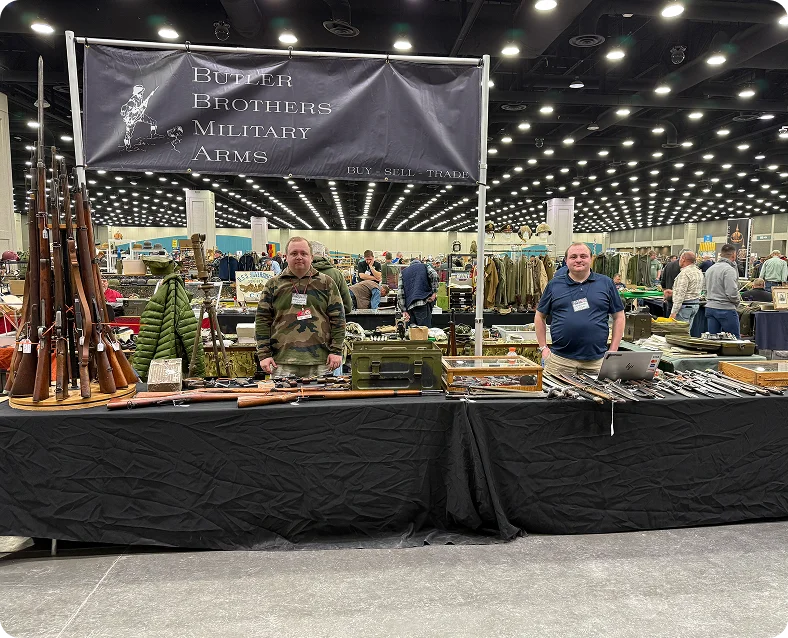
About Butler Brothers
Butler Brothers Military Arms is a family-owned business based in Kalispell, Montana, specializing in 19th- and 20th‑century military firearms and collectibles. Owned by two brothers with a deep passion for collecting and preserving history, we are dedicated to this industry by sharing the stories these pieces carry. Our mission is to provide our customers with high-quality, historically significant items that will enhance any collection. Our inventory constantly changes with acquisitions through private and estate sales of unique collectibles and firearms from all eras. Our focus is our customers' experience and helping them find the piece of history that means something to them.
Butler Brothers Military Arms was founded in 2024 by co-founders Marshall and Grayson Butler. What initially started as buying and selling at local gun shows in Montana and curating high‑quality military firearms has grown into a nationwide venture. Butler Brothers Military Arms attends a long list of gun and collector shows, bringing us as far west as Las Vegas and as far east as Philadelphia. The company is growing quickly while maintaining its values of providing high‑quality collectibles to every collector.
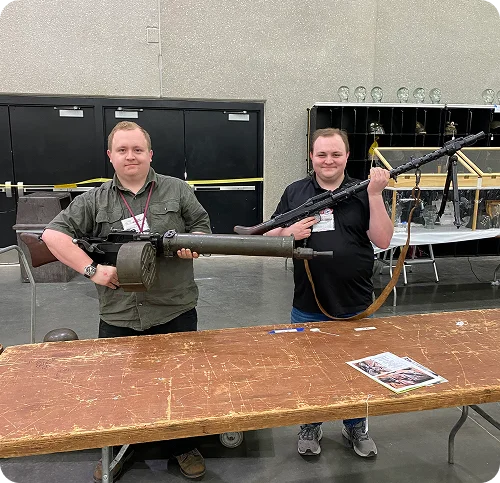
The Brothers Behind the Brand.
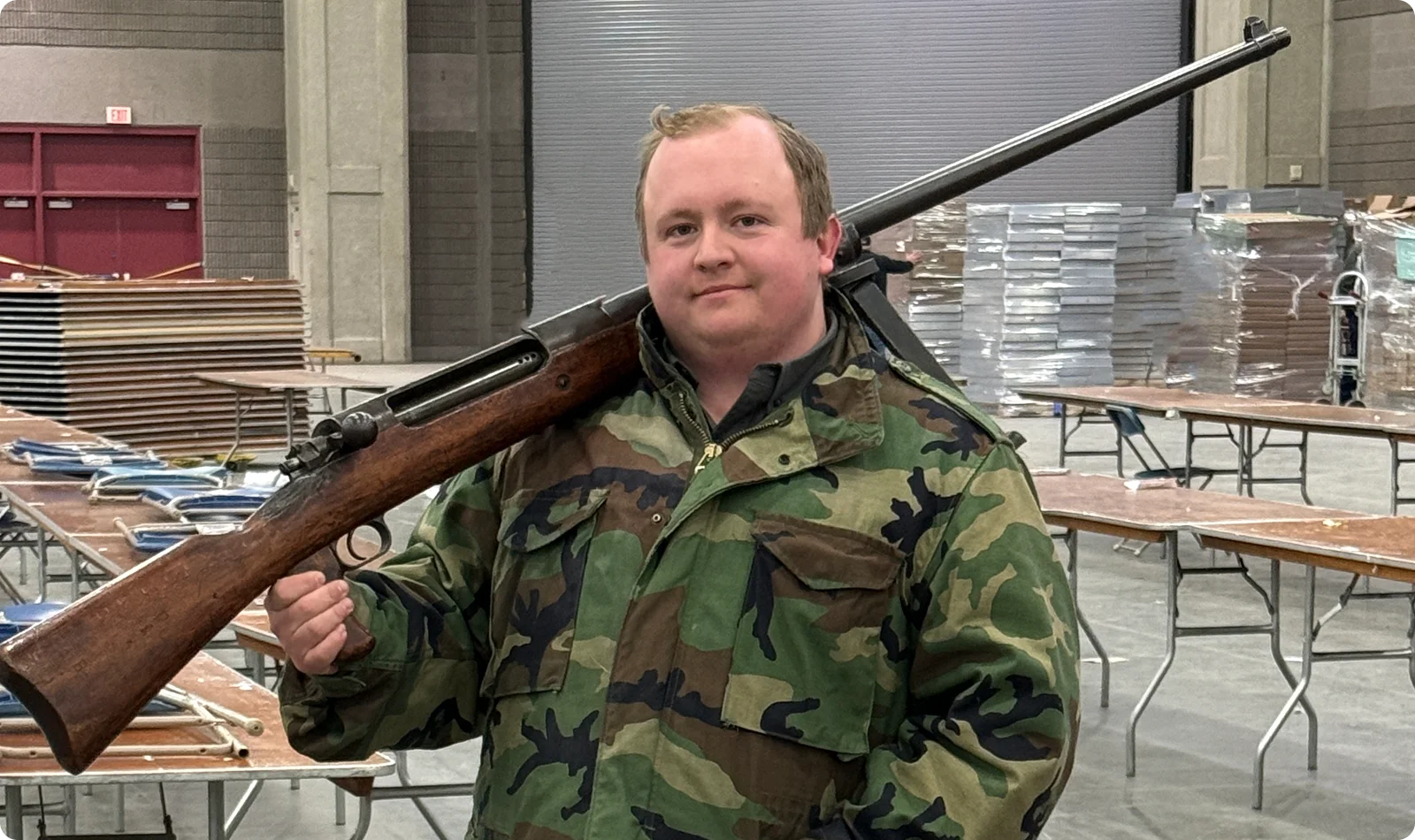
Marshall Butler Bio:
Marshall Butler has spent most of his life immersed in the study, preservation, and collecting of a wide range of military‑era firearms. What began as a personal interest fostered by his grandfather gradually evolved into a deep passion for history and the firearms and collectibles associated with these conflicts. For Marshall, firearms are not merely objects but physical records of history—shaped by conflict, innovation, and the people who carried them.
Marshall has a meticulous eye for detail, focused on curating authentic and high‑condition pieces for both collectors and himself. His approach is grounded in research, documentation, and a strong commitment to preserving these pieces in their original condition rather than restoring them for appearance alone. Marshall has an extensive personal collection of Imperial German firearms but has curated firearms from all eras into his collection.
Marshall has extensive knowledge of firearms through both his education and personal interests. He is a graduate of the Flathead Valley Community College gunsmithing program, where he learned to repair and service all types of firearms. His education extends far beyond formal training, with tens of thousands of hours spent reading books on various conflicts and the weapons used in them. Marshall has dedicated his life to the preservation of history through his knowledge and collecting.
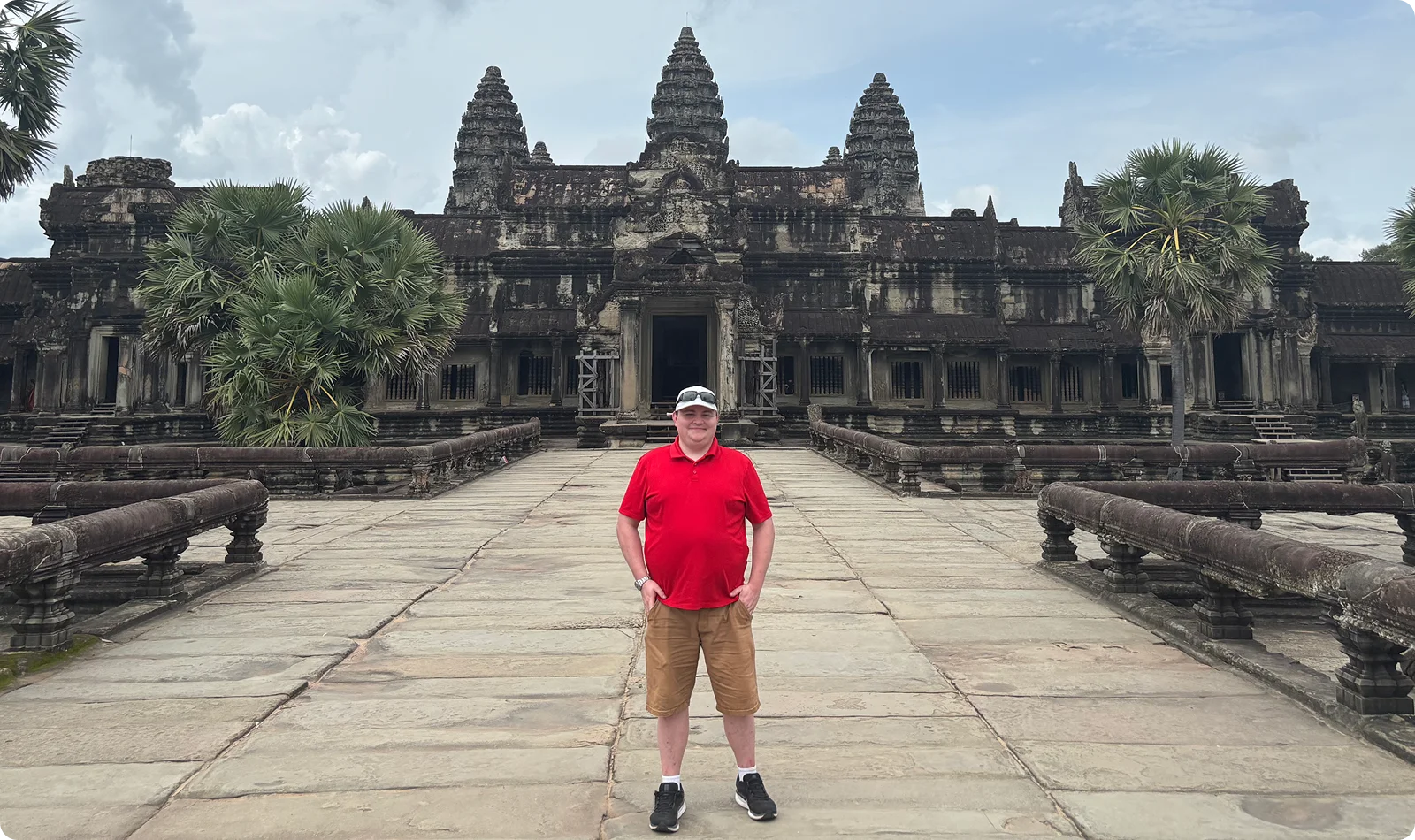
Grayson Butler Bio:
Grayson Butler brings a distinct and complementary perspective to Butler Brothers Military Arms. His early appreciation for firearms was shaped by his grandfather, who introduced him to shooting and ammunition reloading in his garage. Inspired by his grandfather’s respect for Old Western Winchester rifles, Grayson began building his own collection—ultimately gravitating toward World War–era handguns and uniquely engineered historical firearms.
In his role, Grayson oversees documentation standards, back‑office operations, and client relationship management. He is committed to maintaining transparency throughout every stage of the acquisition and sales process. Grayson places particular emphasis on helping clients understand the provenance, historical significance, and broader context of each piece. When not in the office, he is often traveling internationally to source new items or visiting historical sites connected to the conflicts he studies.
Grayson is a graduate of Cornell University, where he earned a degree in Finance and Accounting. Although his academic background is outside the firearms industry, he dedicated much of his time to coursework and independent study focused on World War I and World War II history. He frequently sought out specialized texts within the university’s libraries, cultivating a broad and self‑directed foundation of knowledge.
Grayson’s unconventional path into the field has equipped him with a deep respect for the lessons embedded in historical artifacts. He believes that preserving the past is not simply an act of stewardship but a responsibility—one fulfilled by collecting significant pieces and sharing the stories, provenance, and human experiences behind them.